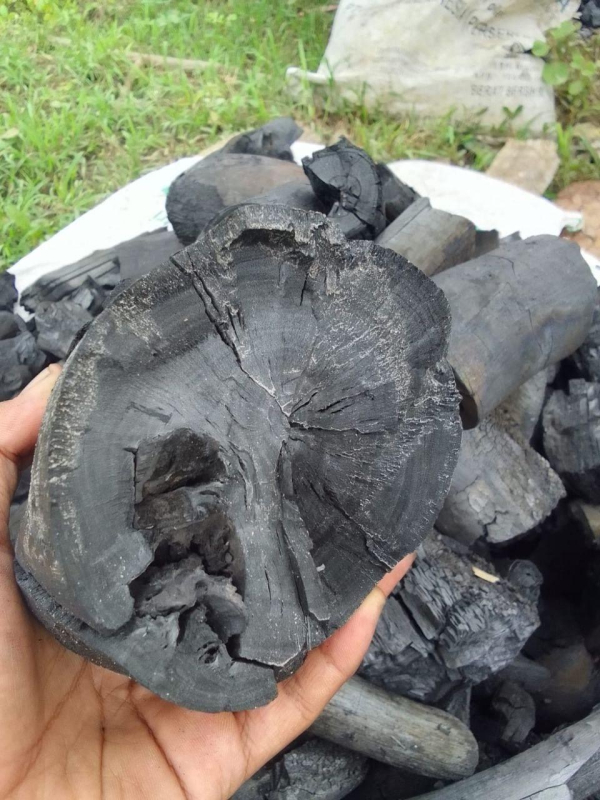
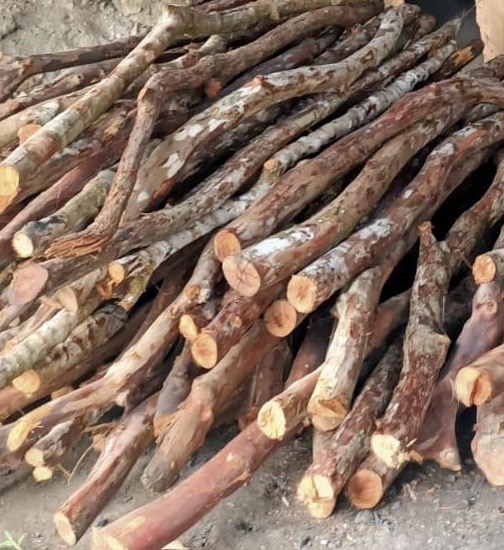
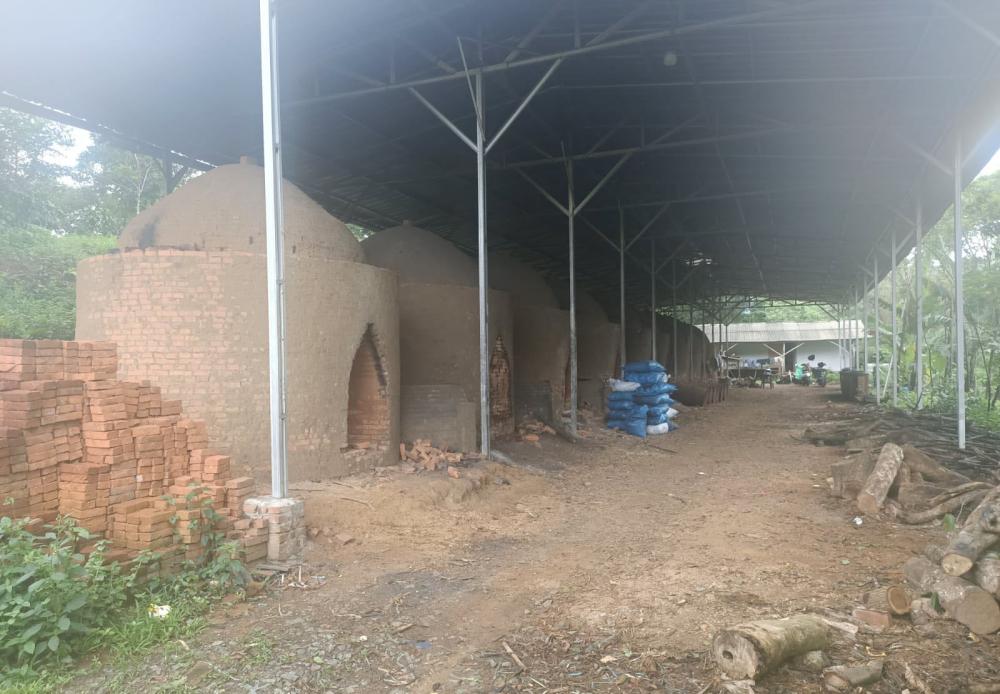
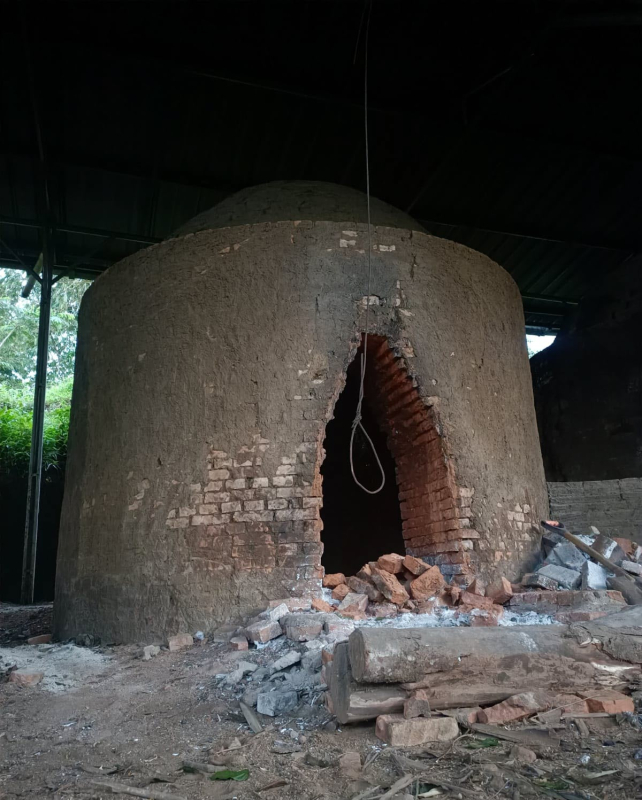
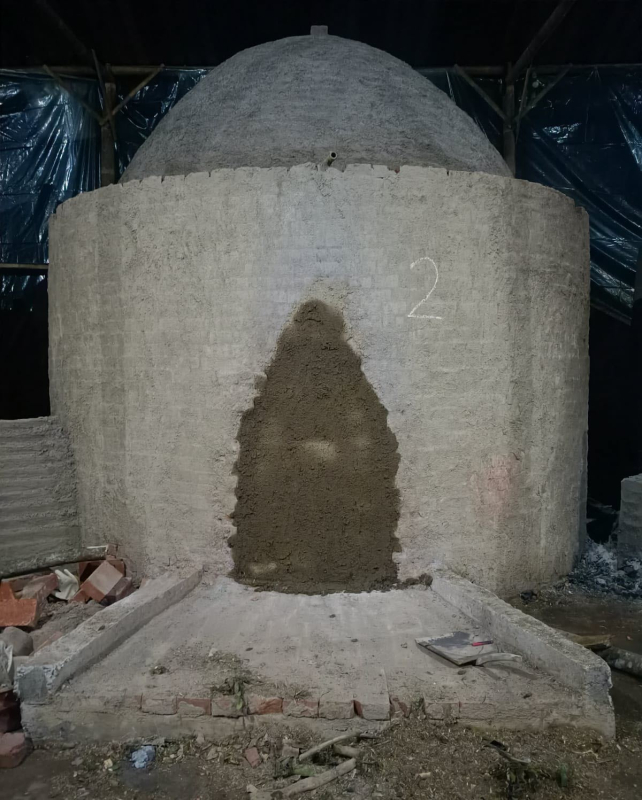
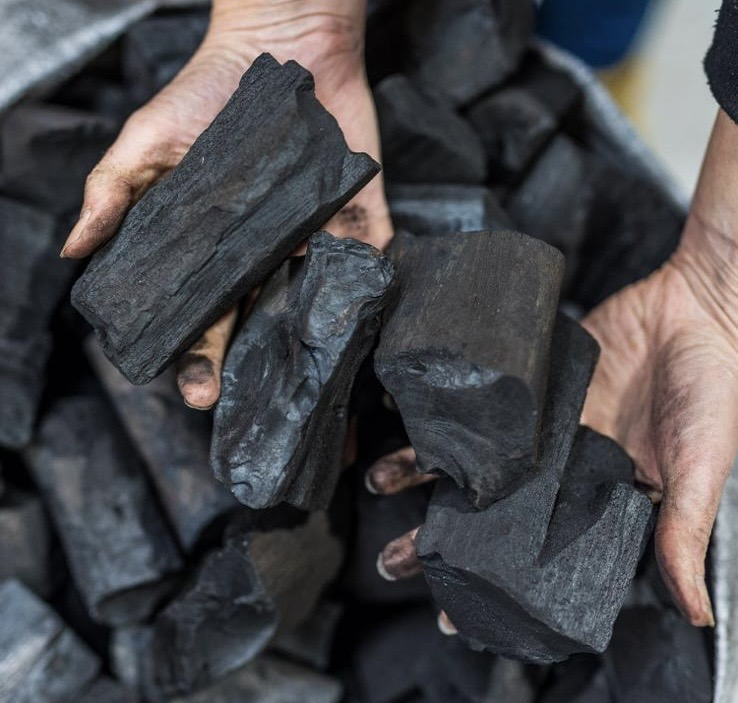
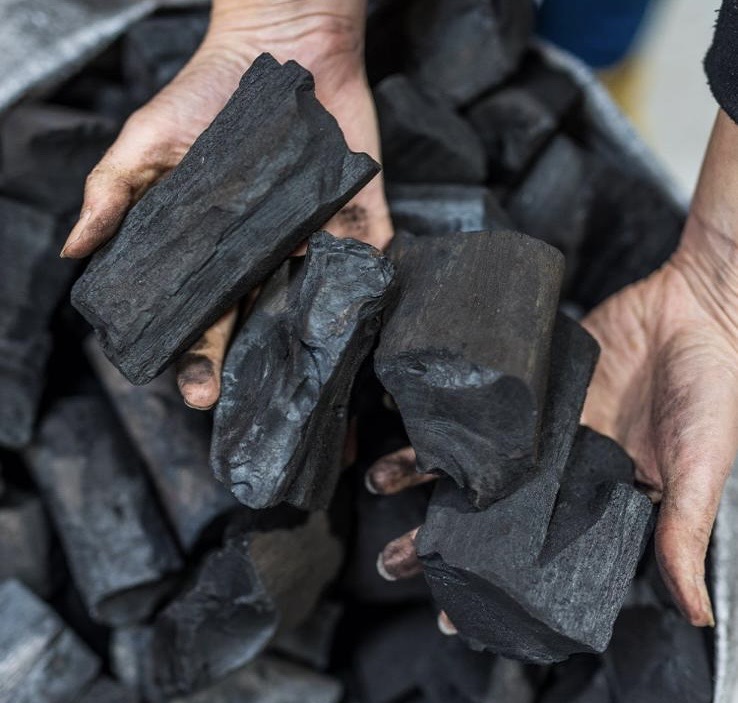
 Regular hardwood charcoal originates from Indonesia and is produced by controlled carbonization (pyrolysis) of hardwood in traditional furnaces or by using special machinery.The production process is carried out under strict national regulations governing legal and sustainable wood sourcing.
Carbonization is typically performed at temperatures around 400-600°C, resulting in a stable charcoal with a fixed carbon content of 70–80%.The bulk density of hardwood charcoal usually ranges from 250 to 350 kg/m³, depending on the wood species used, higher bulk density (up to 400-500 kg per m3) can be obtained by preparing special briquettes in a form of pillows or cubes and pellets by using drying and compression or extruding technology.
The chemical composition of Indonesian hardwood charcoal may vary significantly. In particular Phosphorus (P) content in the ashes of tropical hardwood charcoal can range from 0.01% up to 2–3%, depending on the tree species and growing conditions. For metallurgical or other sensitive applications, laboratory analysis of each batch is strongly recommended. In a case of low Phosphorus content charcoal the raw material for charcoal production must be strictly chosen.