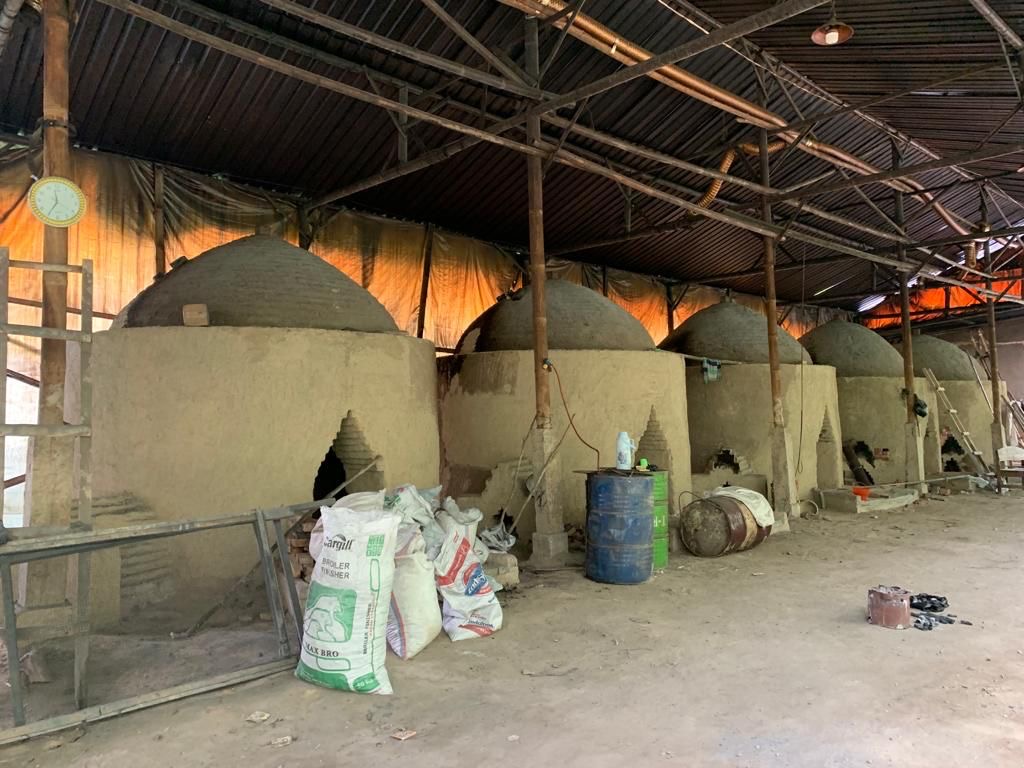
 Charcoal production and transportation in Indonesia
In Indonesia, wood charcoal production is not merely an industrial activity, but a combination of long-established traditions, favorable natural conditions, and gradually adopted modern technologies. Thanks to abundant forest and agricultural resources, the region has remained one of the world’s important producers of wood charcoal for decades.
Hardwood charcoal is produced through carbonization (pyrolysis) — the thermal decomposition of wood in a low-oxygen environment. Depending on the technology used, operating temperatures, and the required quality of the final product, the full production cycle may last from 6–12 hours to several days. In rural areas, traditional earth or brick kilns are still widely used. Wood is stacked inside the kiln, ignited, and then carefully sealed to restrict oxygen supply, allowing the material to slowly transform into charcoal rather than burn completely. Temperatures typically rise to 400–500 °C, ensuring effective carbonization.
Common hardwood species used for charcoal production include coffee wood (Caesalpinia), mahogany (Swietenia macrophylla), rubber wood (Hevea), iron wood (Eusideroxylon zwageri), and eucalyptus. These species are selected for their density and carbon yield, which directly influence charcoal strength and fixed carbon content.
No external gas or electricity is required during production. Instead, waste biomass such as low-grade wood and processing residues is commonly used as a fuel for the kilns, improving overall energy efficiency and minimizing waste.
Once carbonization is complete, the kilns are sealed and the charcoal is allowed to cool slowly. This stage cannot be accelerated, as contact between hot charcoal and air may lead to spontaneous ignition. After cooling, the charcoal is unloaded manually and carefully sorted. Larger, intact pieces are selected for BBQ, restaurant use,while fines and dust are removed. Quality is assessed based on density, color, structural integrity, and the presence of cracks.High quality charcoal is widely exported for shisha smoking.
The charcoal then undergoes additional drying and stabilization to reduce residual moisture to minimal levels.
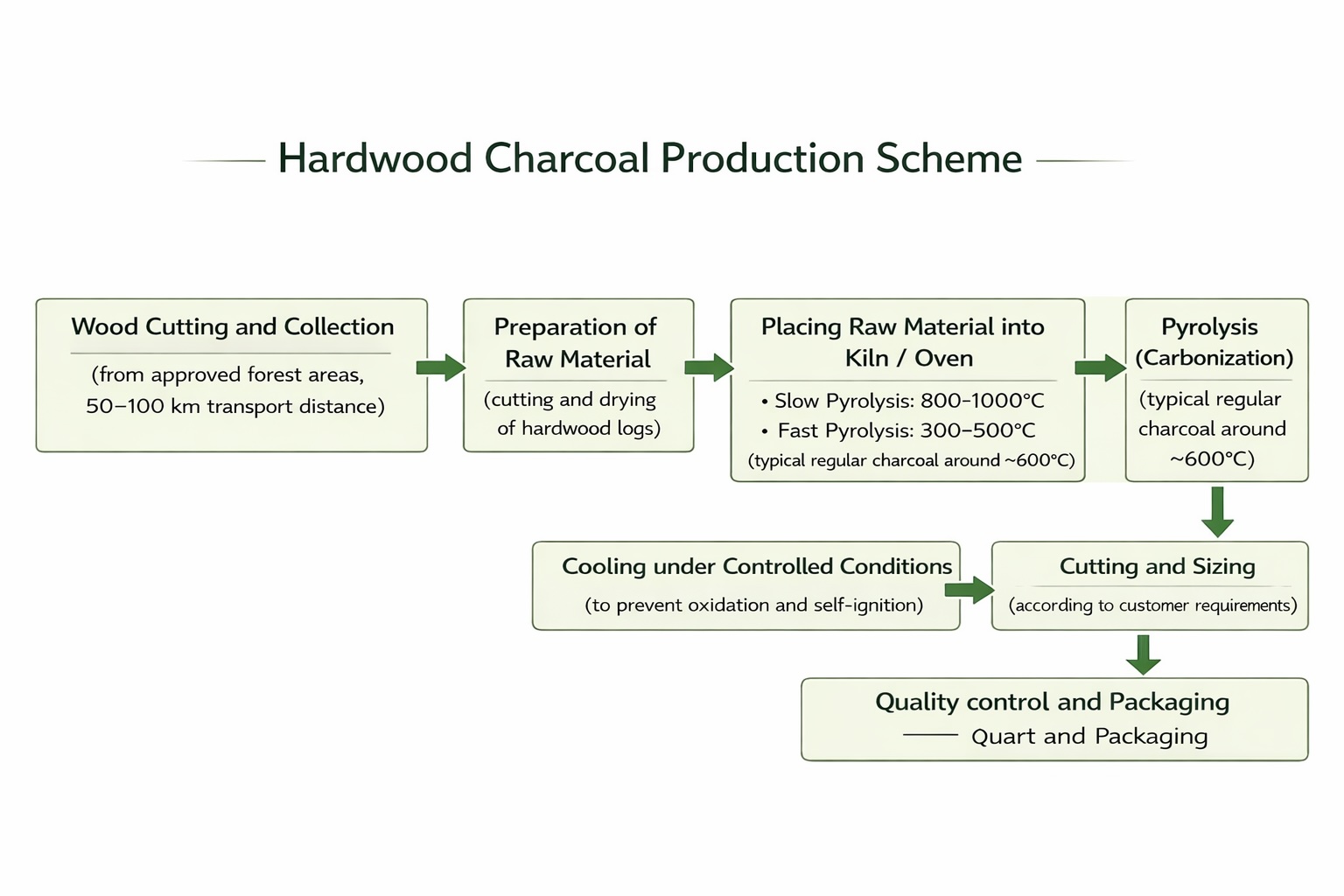
Additional production facts
- The ratio of raw wood input to charcoal output typically ranges from 6:1 to 4:1, depending on wood species and process efficiency.
- For the production of 1 metric ton of charcoal, approximately 150–350 kg of fuel wood is consumed to heat the ovens.
- Higher pyrolysis temperatures generally increase fixed carbon content and reduce volatile matter.
- Charcoal is porous and hygroscopic; proper dry storage is essential to maintain quality.
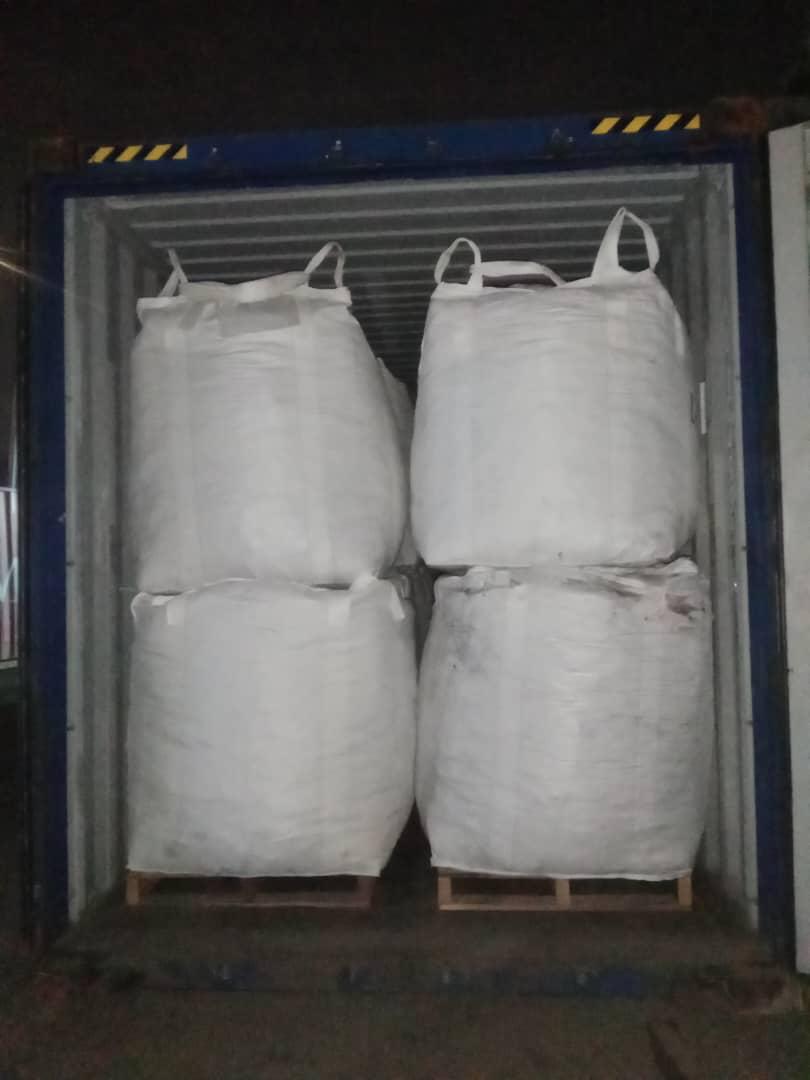 Transportation. Wood charcoal is classified as a self-heating cargo. The final stage involves packaging the product into bags of various sizes or loading it into containers, with careful attention to ventilation and safety requirements.Big quantities of charcoal are transported in jumbo bags (big bags) of 500-1000 kg in 40 feet High Cube sea containers. One 40f High Cube container will have only 18-20 mt.
Every container will be accompanied by the following documents:
- Certificate of Analysis
- Self-Heating Test Certificate
- MSDS