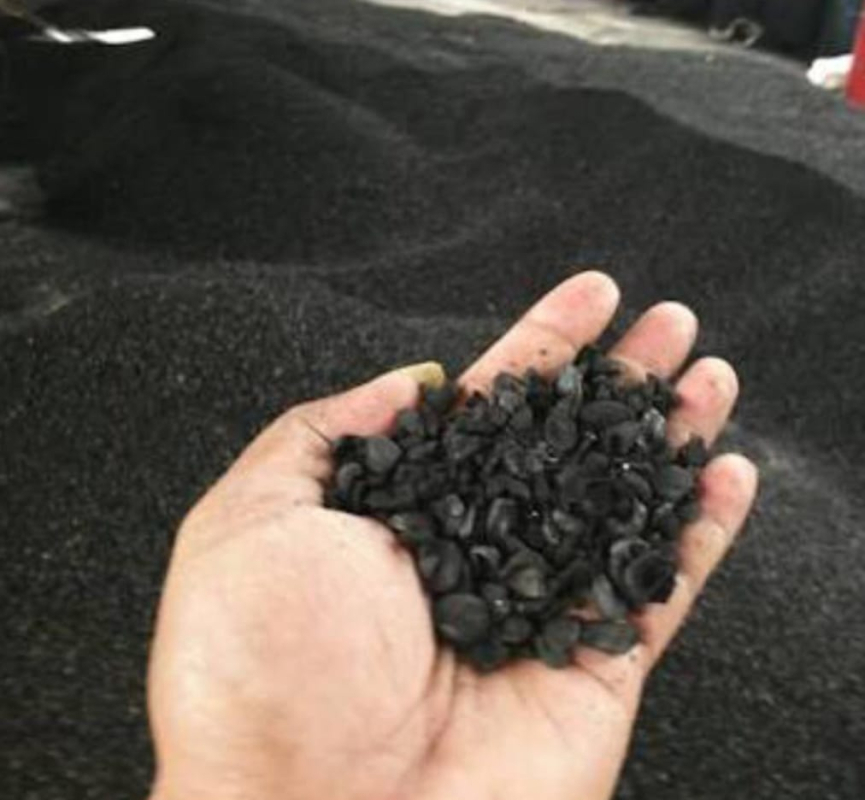
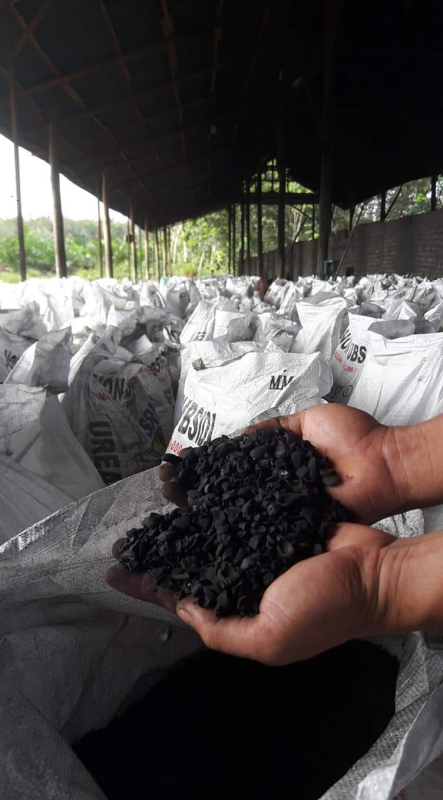
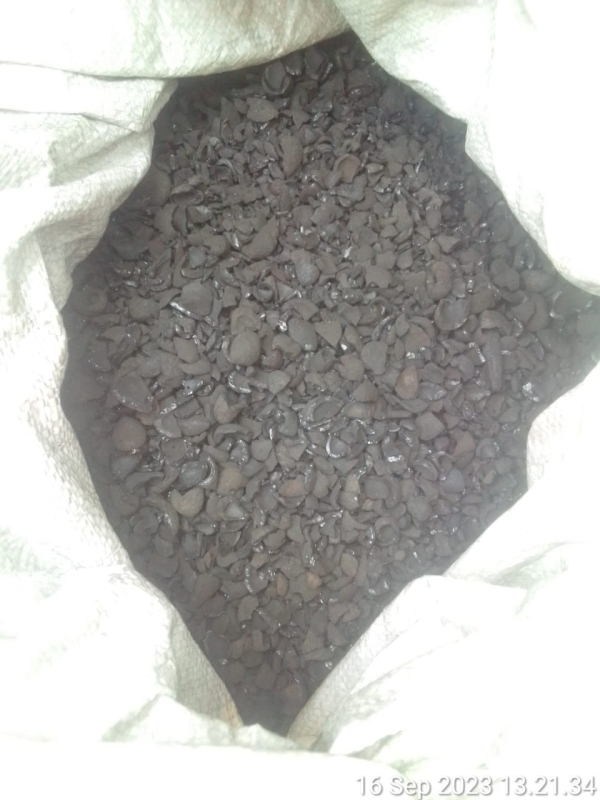
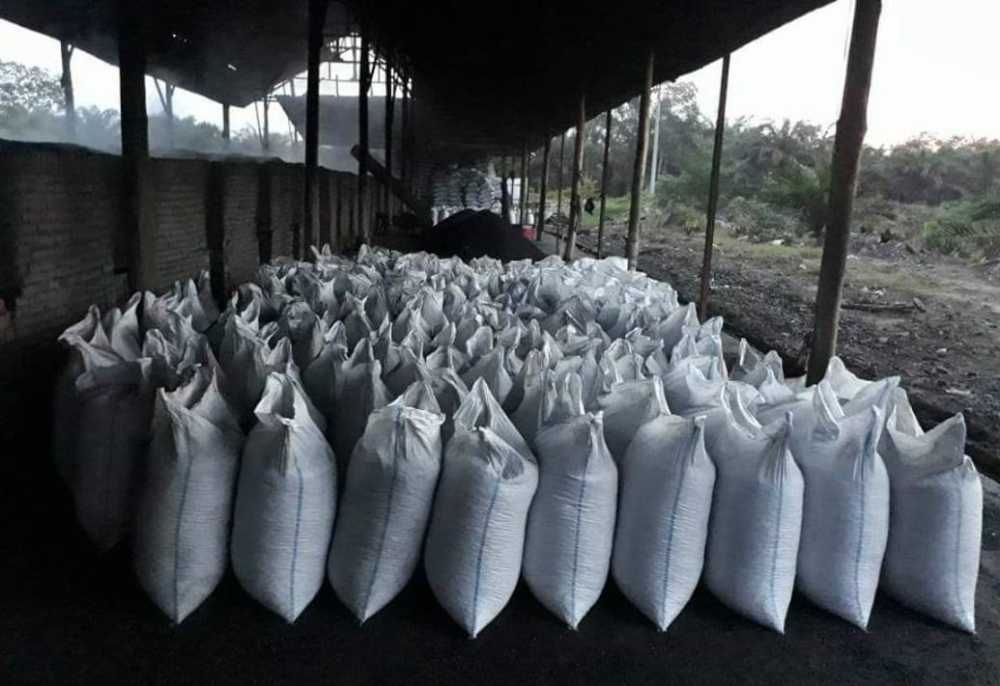
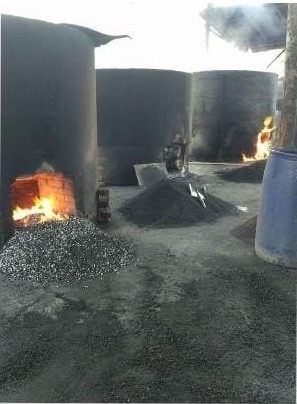
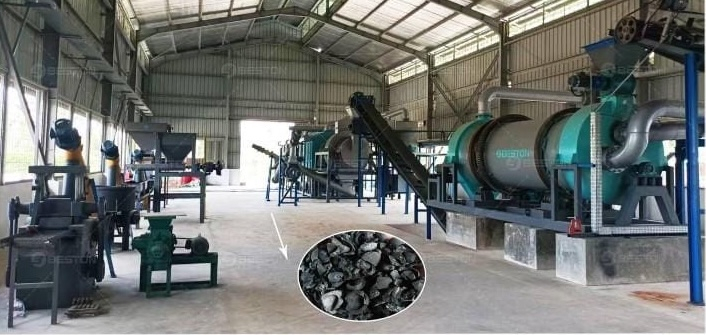
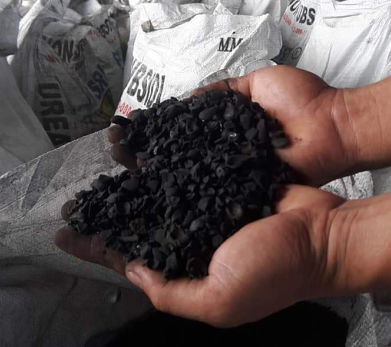
 PKS charcoal (Palm Kernel Shell charcoal) is an alternative to hardwood charcoal. Countries of origin: Indonesia and Malaysia.
PKS is a by-product of palm oil production and is widely used as a biofuel in South Korea and Japan. More information about raw material: Palm kernel shells (PKS)
PKS charcoal is produced from palm kernel shells and typically has a carbon content of about 80–82%. The bulk density of PKS charcoal is significantly higher than that of hardwood charcoal and is approximately 600 kg/m³.
By comparison, regular Indonesian hardwood charcoal typically has a bulk density of around 350–400 kg/m³, depending on the tree species used, while European hardwood charcoal produced from aspen or alder may have an even lower bulk density of only 180–250 kg/m³. Low bulk density creates logistical challenges for container, truck, and vessel transportation, as a relatively low cargo weight occupies a larger volume, resulting in higher transportation costs per metric ton.
According to producers’ data, a 40-foot High Cube container can be loaded with approximately 25 metric ton of PKS charcoal, whereas the same container usually carries only about 18 metric ton of hardwood charcoal. This makes PKS charcoal significantly more attractive from a logistics and transportation perspective. In addition, PKS charcoal has a more stable chemical composition, ensuring more consistent performance in industrial applications.
Unfortunately High Grove Index (HGI) of PKS charcoal is abt 25 which makes difficult its milling by the coal mills of the metal plant. This seems to be a serious obstacle for its use in metallurgy.
Qualily
|
Parameter |
Value |
|
Moisture content |
- % dry bases |
|
Ash content |
6,23 % dry bases |
|
Volatile matter |
7,16 % dry bases |
|
Fix carbon |
83,37 % dry bases |
|
Goss Calorific Value |
7,221 Kcal/kg dry bases |
|
Phosphorus (in Ash) |
0,31 Pct |
|
Сhloraine |
0,05 Pct |
|
Bulk density (kg/m3) |
601 kg/m3 |
|
ANALYSIS RESULTS |
|
| Carbonation test | open file |
Product videos